

Using AI to Personalise SMS Without Burning Your Unsubscribe Rate
 Shrestha Ghosal
SMS is the highest-attention channel in your retention stack. A 98% open rate sounds like the answer to every marketer's problem. But that number comes with a cost: your subscribers are paying close attention, and they notice when something feels off.
Personalisation done well in SMS makes a customer feel like a brand actually knows them. Done badly, it reads as surveillance. The line between the two is thinner than most brands think, and the penalty for crossing it is an unsubscribe that does not come back.
Let's find out how to use AI to personalise SMS without burning through the goodwill you spent months building.
Why SMS personalisation is different from email personalisation
Email gives you room to be wrong. A poorly personalised email gets ignored. The subscriber stays on your list, your deliverability takes a minor hit, and you try again next week.
SMS does not work that way. The channel is personal by default. It sits next to messages from friends and family. When a brand sends something that feels generic, mistimed, or intrusive, the response is immediate: unsubscribe, or worse, a spam report.
The bar for SMS personalisation is genuinely higher than most DTC brands treat it. Merging a first name into a message is not personalisation. Sending a replenishment reminder based on a customer's actual purchase cycle, with a product they have bought twice before, at a time they have previously engaged, is personalisation.
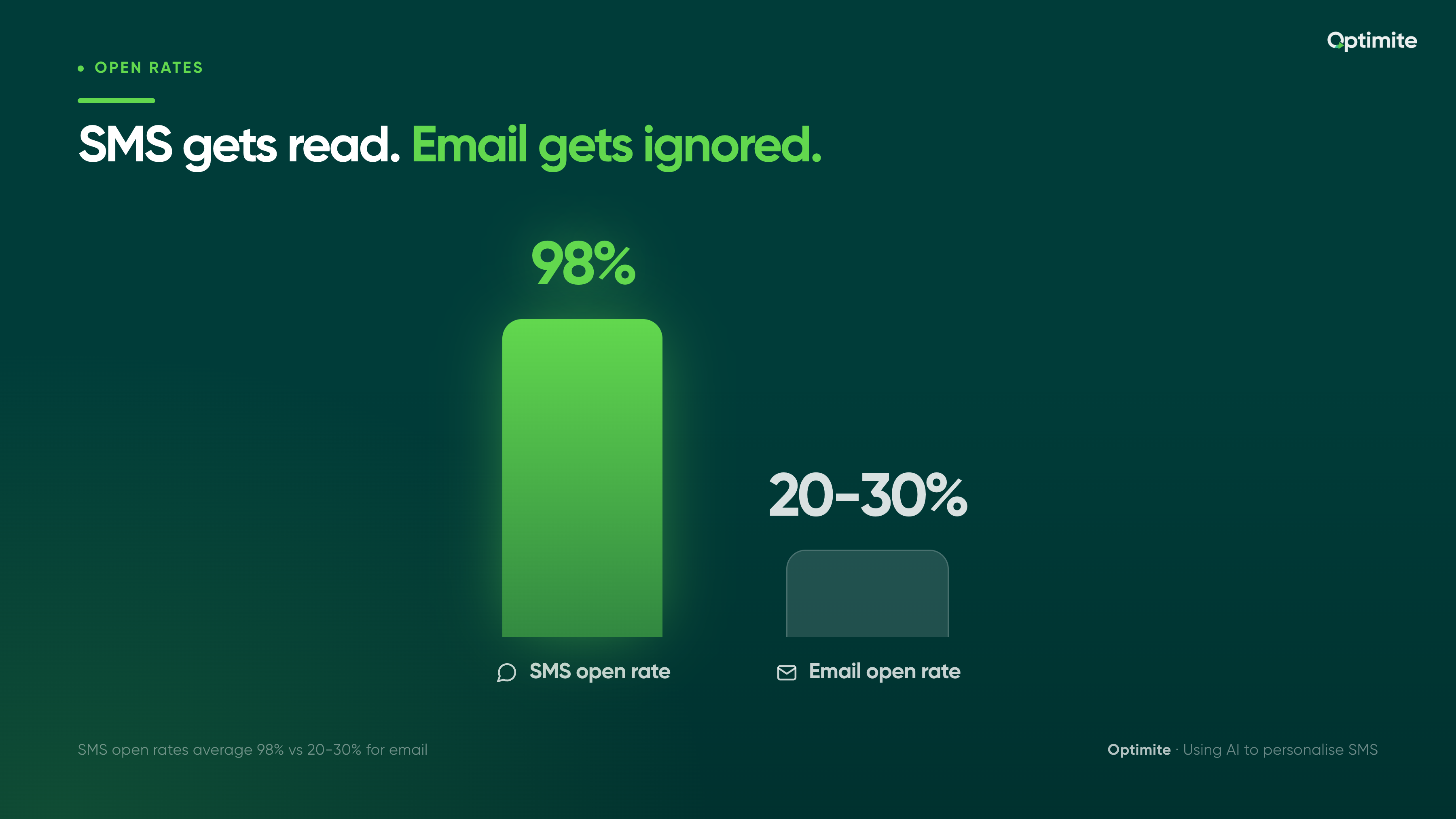
SMS open rates average 98% vs 20-30% for email. But SMS unsubscribe rates spike fast when content feels irrelevant. The channel rewards relevance and punishes volume in a way email does not.
What AI actually does for SMS personalisation
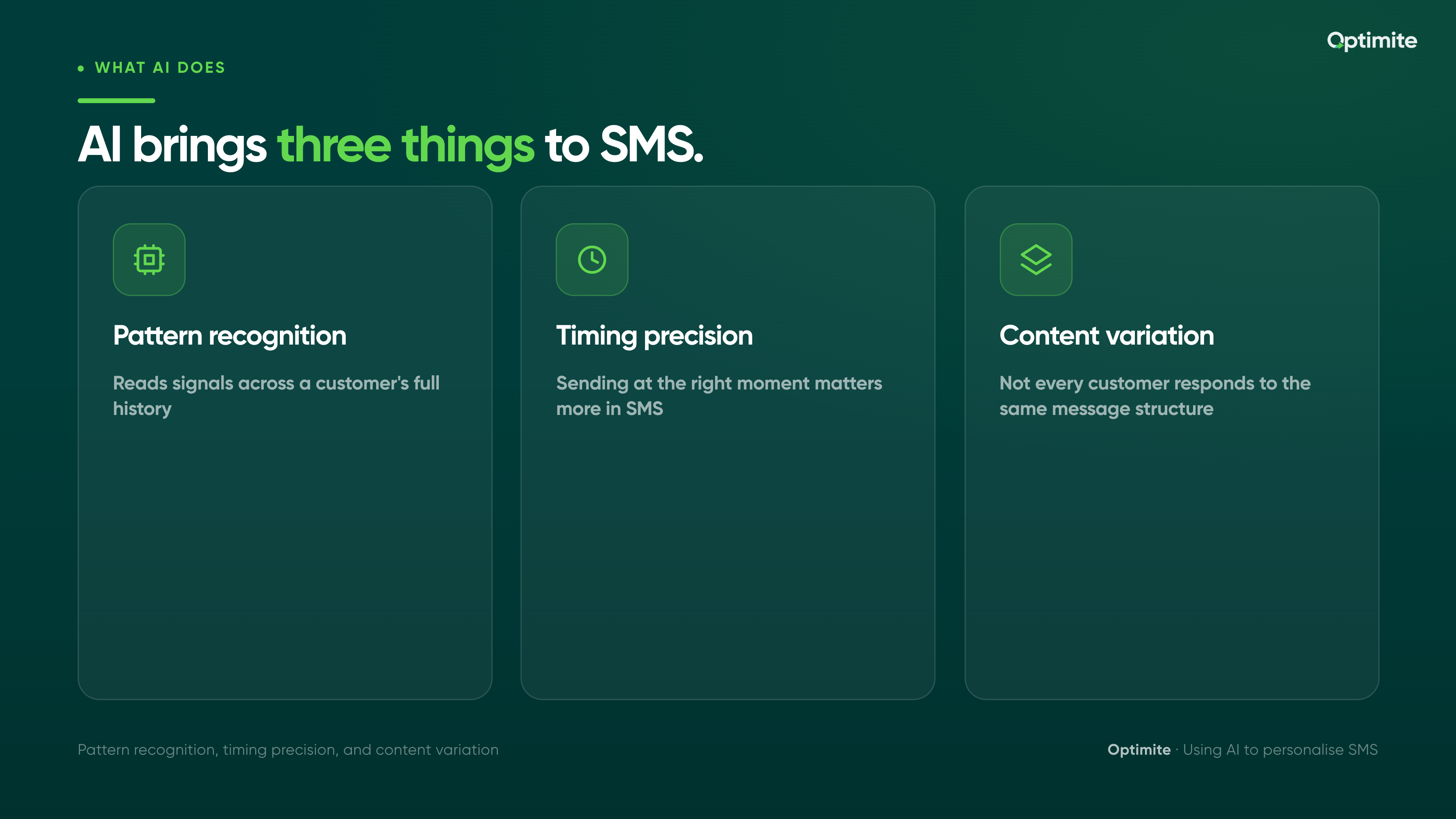
AI brings three things to SMS personalisation that manual segmentation struggles to deliver at scale: pattern recognition, timing precision, and content variation.
Pattern recognition means the AI reads signals across a customer's full history, not just their last order. It notices that a customer always buys a specific product category, tends to purchase within 48 hours of receiving an SMS, and has a 35-day average repurchase window. That combination of signals produces a much sharper trigger than a fixed rule ever could.
Timing precision is where SMS lives or dies. Sending at the right moment matters more in SMS than in any other channel because the read is almost immediate. AI can identify the window when a specific customer is most likely to engage based on their past behaviour, rather than sending at whatever time the campaign is scheduled.
Content variation is the third lever. Not every customer responds to the same message structure. Some respond to product-led messages. Others respond to social proof. Others respond to scarcity. AI can test and learn these preferences across segments without a strategist manually setting up every variant.
Before layering AI onto your SMS programme, audit your data. AI personalisation for SMS requires accurate purchase history, product affinity tags, and engagement data from previous sends. If your Klaviyo profiles are incomplete, your personalisation will be too.
The patterns that kill your unsubscribe rate
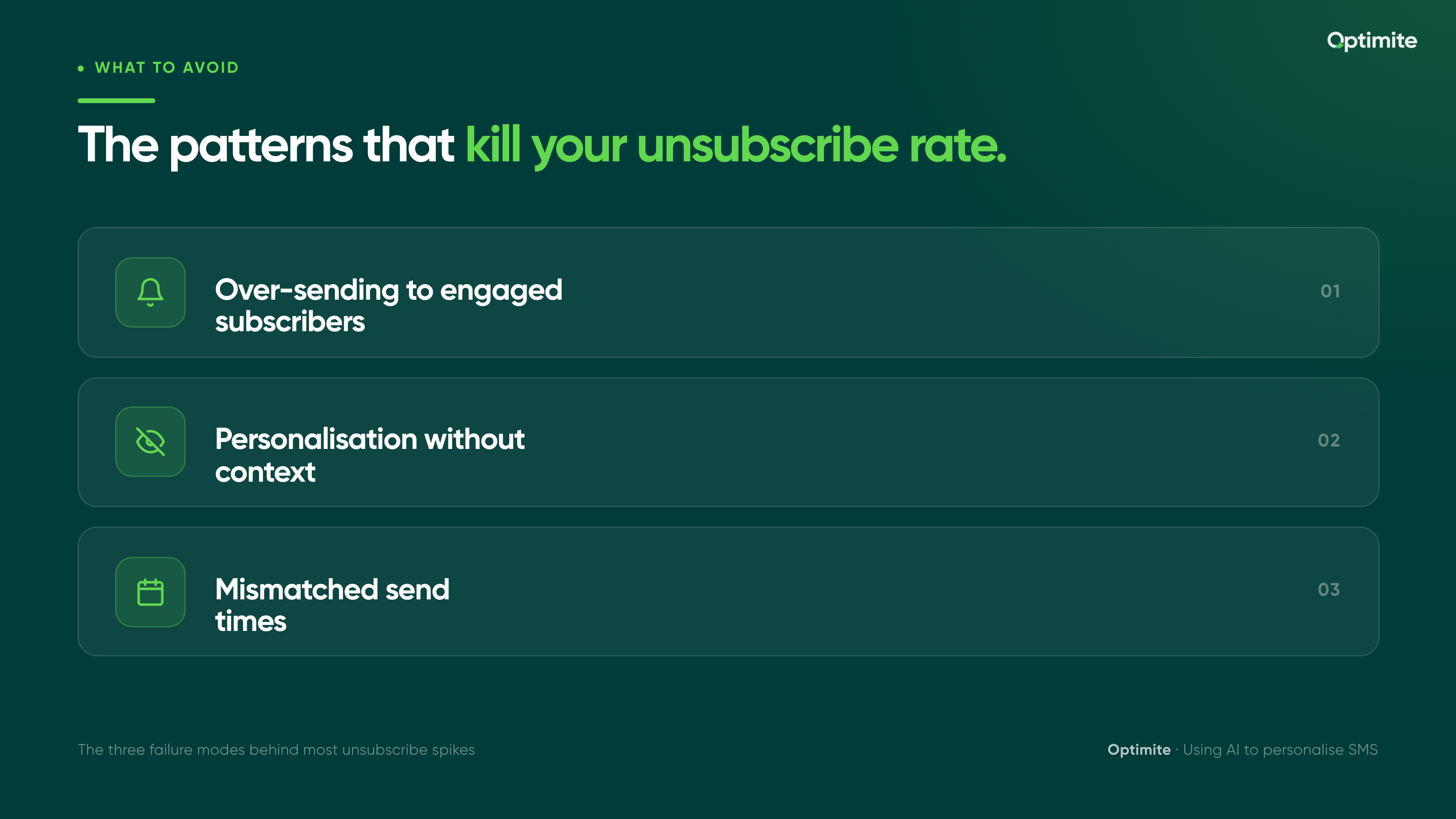
Most SMS unsubscribe spikes come from a handful of predictable mistakes. AI can help avoid some of them, but a few are strategic decisions that no tool can make for you.
Over-sending to engaged subscribers is the most common. A customer who opens every SMS is not an invitation to send more. High engagement scores can mask fatigue that shows up as an unsubscribe two months later. Frequency caps need to be set intentionally, not determined by who happens to be in the active segment.
Personalisation without context is the second pattern. Using a customer's name and their last product in the same message can feel helpful. Using their browsing history, last search, and location in a single SMS feels like you have been watching them. AI can access all of that data. That does not mean every signal should show up in the message.
Mismatched send times are the third failure mode. A wellness brand we work with was sending SMS messages at 11 am on weekdays based on average open time data across their full list. When they segmented by customer type and used individual engagement history instead, their click rate improved, and their unsubscribes dropped. The list average was hiding significant variation.
A fourth pattern worth flagging: promotional messages sent to customers who have never opted in to promotional SMS. Transactional consent does not cover marketing sends. This is a compliance issue as much as a personalisation one.
Never use SMS promotional sends to customers who only opted in for transactional messages. The legal risk is real, and the unsubscribe rate from that segment will be significant. Keep your consent records clean and audit your opt-in sources before any new AI-driven send.
Building the right data foundation for AI-driven SMS
AI personalisation in SMS is only as precise as the data feeding it. Before you connect any AI layer, these are the inputs that determine whether the output is useful or noise:
- Purchase history by product category, not just order count. A customer who has bought the same SKU three times and a customer with three different orders have very different personalisation needs.
- Repurchase window data at the individual level. Average repurchase windows are a useful starting point. Individual repurchase windows are what you actually send against.
- SMS engagement history: opens, clicks, and response patterns from previous sends. This is the most direct signal for timing.
- Zero-party data: stated preferences, quiz responses, and subscription choices. This is the cleanest input because the customer gave it to you directly.
- Opt-in source: a customer who opted in during checkout has different expectations from one who opted in via a loyalty programme sign-up. Segment these and message them accordingly.
A supplement brand at around $4M in revenue had all of this data sitting in their Klaviyo account but had never structured it into actionable segments. When we built segments around repurchase window and product affinity and fed those into their SMS flows, their repeat purchase rate from SMS improved significantly within 90 days. The AI did not change its data. It just made better use of what was already there.
You do not need a large list to benefit from AI-driven SMS personalisation. A list of 5,000 with good data will outperform a list of 50,000 with poor data. Focus on data quality before you focus on list growth.
What good AI-personalised SMS looks like in practice
Here is a useful test. Remove the customer's name and the product reference from your SMS. If the message could have been sent to anyone on your list, it is a broadcast with a merge tag, not a personalised send.
Good AI-personalised SMS is triggered by a specific signal, references something the customer has actually done or bought, and arrives at a time that reflects their individual behaviour pattern. It is short, it has one clear action, and it does not feel like it came from a marketing platform.
The brands that get this right tend to treat SMS as a high-trust, low-volume channel. They are not trying to maximise send frequency. They are trying to maximise the relevance of every send.
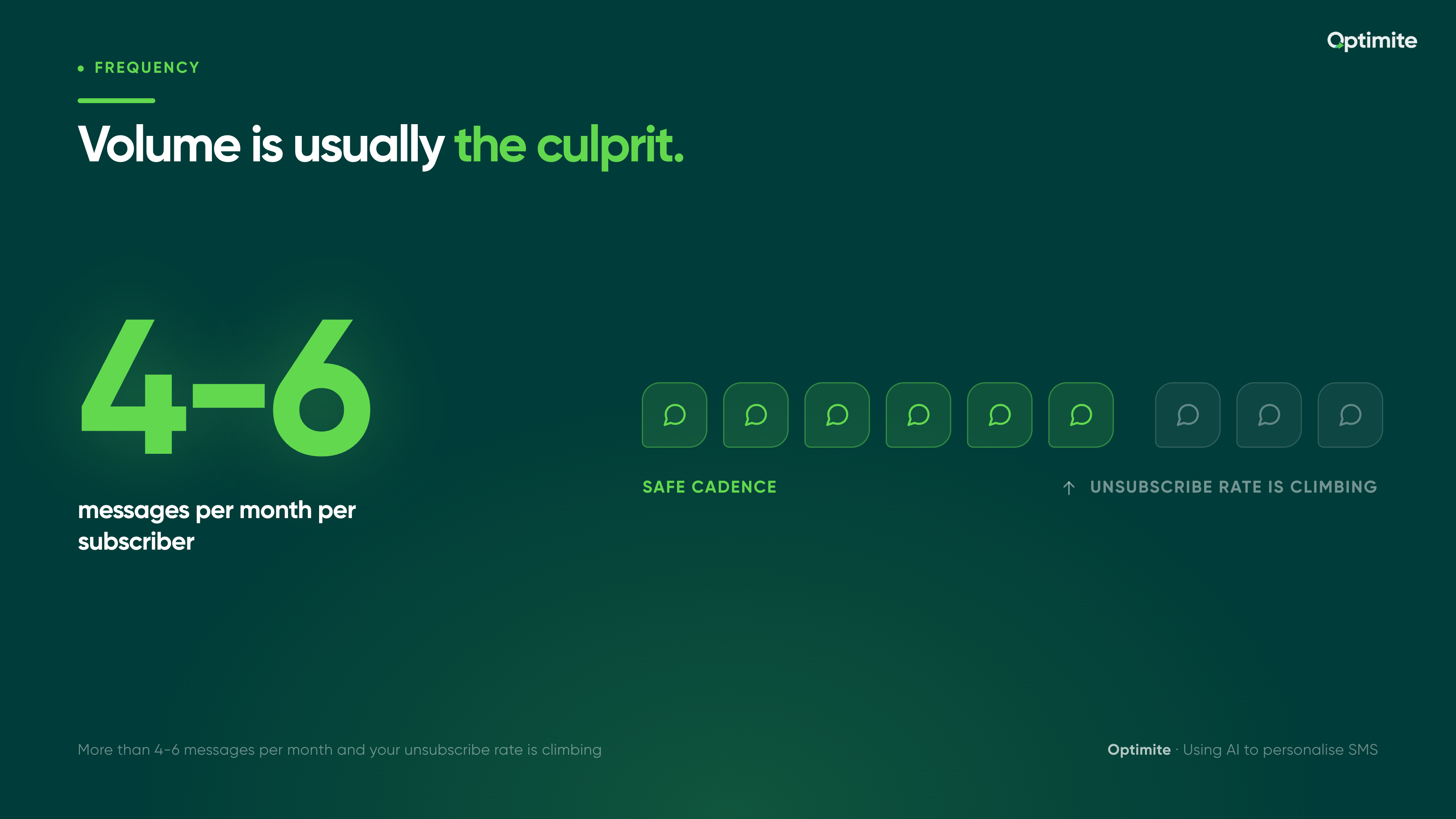
If your SMS programme is sending more than 4-6 messages per month per subscriber and your unsubscribe rate is climbing, the problem is rarely the personalisation layer. Volume is usually the culprit. AI can sharpen your targeting, but it cannot compensate for a send cadence that has outpaced the trust you have built.
Building a retention programme that uses both channels well, with the right data, the right timing, and the right frequency, is where the real revenue lives. You can see what that looks like across the DTC brands we have worked with in our case studies.
Keep reading.
All posts
Post-Purchase Email Sequence: The 5 Emails Every E-commerce Brand Needs
Shrestha Ghosal · Jun 17, 2026

How to Test Email Subject Lines Without Wasting Your List
Arpit Mehar · Jun 16, 2026

10 Mobile Email Mistakes Killing Your Click-Through Rate
Arpit Mehar · Jun 15, 2026