

Klaviyo Personalization Without Creeping Out Your Customers
Personalization drives repeat purchase. Here's how to do it without making customers feel watched.
 Arpit Mehar
You're building a personalized email in Klaviyo. You pull in the customer's first name. You reference their purchase history. You show them products similar to what they bought last time. You hit send.
Then you think: does this feel personal or invasive?
That tension is real. Personalization is powerful. It drives engagement and repeat purchase. But there's a line. Cross it and customers feel watched. They unsubscribe. They distrust your brand.
Most Klaviyo users don't think about this line. They just add personalization because they can. They show too much. They reference too much. They make customers uncomfortable without realizing it.
The brands that win personalize without creeping anyone out. They use customer data strategically. They show they know the customer without showing they know everything.
This post walks through how to do it. The ethical framework. The practical balance. The examples of what works and what doesn't.
Why personalization feels creepy sometimes
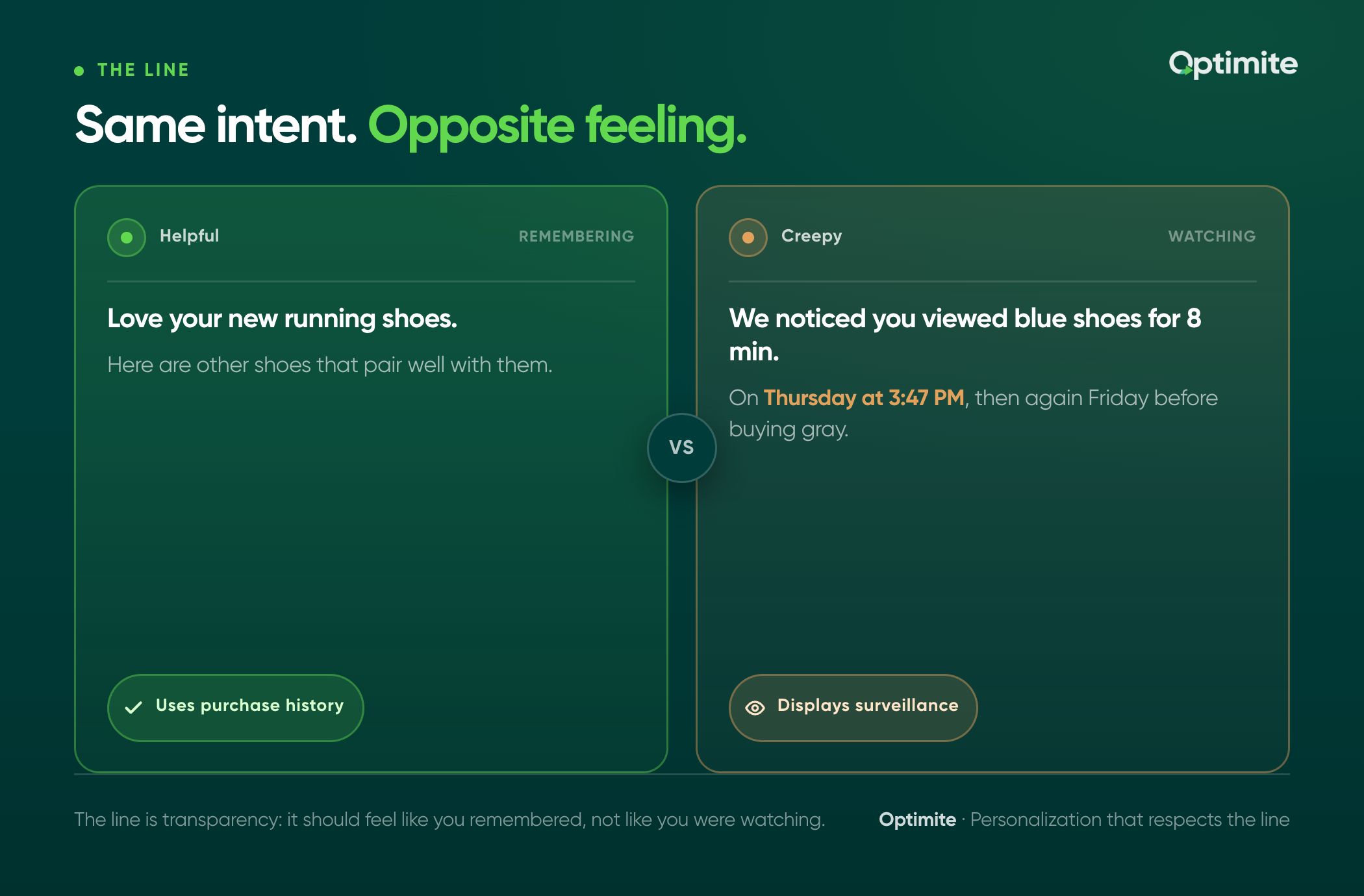
Let's start with a real example.
A customer buys a pair of running shoes from a fashion brand. Two days later, they get an email that says: "We noticed you looked at our blue running shoes for 8 minutes on Thursday at 3
PM and then came back on Friday at 2 PM before buying the gray pair. Here are other running shoes you might like."That's creepy. The brand is showing they tracked every second of the customer's browsing. The level of detail feels invasive. The customer reads that and thinks: "How much are they watching?"
Now compare that to: "Love your new running shoes. Here are other shoes that pair well with them."
Same personalization intent. Totally different feel. The second one uses customer data (purchase history) without displaying how much surveillance happened.
The line between helpful and creepy comes down to transparency. If the personalization feels like someone is watching your every move, it's creepy. If it feels like a brand remembering something you told them, it's helpful.
Klaviyo personalization can go either way. Your job is to make sure it goes the helpful direction.
What Klaviyo personalization actually does
Let's be clear on what Klaviyo personalization is technically doing.
Klaviyo syncs your Shopify customer data. Purchase history, browse history, product tags, custom properties, engagement level. You use this data to personalize emails.
You can personalize:
- First name and last name
- Product recommendations based on purchase history
- Messaging based on customer segment (subscriber vs. one-time buyer)
- Offers based on customer lifetime value
- Content based on engagement level
- Dynamic blocks that show different content to different segments
None of this is new. Amazon does it. Spotify does it. Your bank does it. Personalization based on customer behavior is standard.
The question isn't whether to personalize. It's how to personalize in a way that feels helpful, not invasive.
The personalization that works and doesn't feel invasive
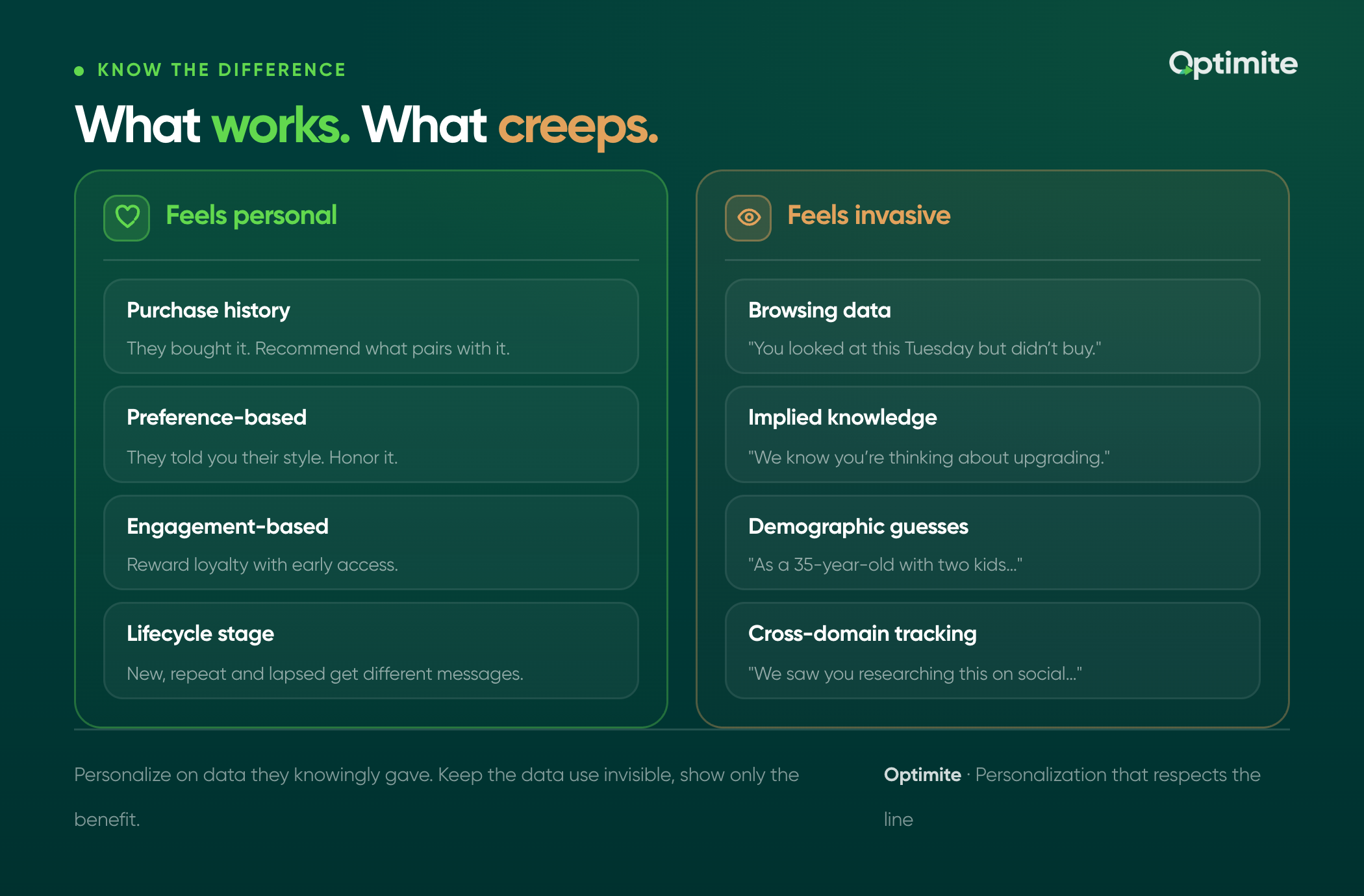
Here's what customers find helpful:
Purchase history personalization. "You bought this product. Here's what pairs well with it." This feels natural. You bought running shoes, so showing you socks that match makes sense.
Preference-based personalization. "You're interested in sustainable fashion. Here's our new eco-friendly line." You told the brand your preferences (or they inferred it from your behavior). Personalization based on that feels expected.
Engagement-based personalization. "You love our newsletter. Here's early access to our new collection." The brand is rewarding loyalty. That feels good.
Lifecycle stage personalization. A new customer gets onboarding emails. A repeat customer gets loyalty content. A lapsed customer gets win-back offers. Different customers, different stages, different messages. This feels thoughtful, not invasive.
The best personalization feels like the brand remembering something you cared about, not like they're watching your every move.
The personalization that creeps people out
Here's what customers find invasive:
Showing browsing data. "You looked at this product on Tuesday but didn't buy. Why?" The customer didn't intend to share their browsing. Displaying it back to them feels like surveillance.
Implying knowledge they didn't give. "We know you're thinking about upgrading your kitchen." The customer never said this. The brand inferred it from their browsing. The specificity feels creepy.
Demographic assumptions. "As a 35-year-old woman with two kids..." The customer never said this. The brand inferred it from data. Stating it feels invasive.
Cross-domain tracking. "We saw you researching this topic on social media..." The customer goes to lots of places on the internet. Knowing that feels like too much.
The pattern: personalization becomes creepy when it displays surveillance. When the customer can see how much the brand is tracking them, it switches from helpful to invasive.
The ethical framework for Klaviyo personalization
Before you deploy personalization in Klaviyo, ask yourself these questions:
Does the customer know I have this data? If you're personalizing based on purchase history (they bought from you), yes they know. If you're personalizing based on inferred preferences (you guessed their style from browsing), maybe they don't. Be careful with the second one.
Would the customer expect this personalization? If they bought running shoes, would they expect to see running shoe recommendations? Yes. Would they expect you to know they looked at running shoes for 8 minutes on Thursday at 3
PM? No.Am I personalizing or just surveilling? Big difference. Personalization is using data to send better messages. Surveilling is displaying how much data you collected. Don't do the second.
Could this make the customer uncomfortable? If you're unsure, ask yourself: would I be comfortable if I got this email? If the answer is no, don't send it.
Is this a nice-to-have or a need-to-have? Personalizing product recommendations is a need-to-have. Displaying browsing timestamps is a nice-to-have that crosses into creepy. Skip the nice-to-haves.
Real examples of personalization done right
A wellness brand we work with does personalization well. They send post-purchase emails that reference the specific product the customer bought. "How are you loving your magnesium supplement?" Simple. Feels natural. Not creepy.
A fashion brand personalizes by style. They tag customers by style preference (minimalist, bold, classic). Then they send style-specific recommendations. A minimalist customer sees clean lines and neutral colors. A bold customer sees statement pieces. Both feel like the brand understands them. Neither feels invasive.
A food brand personalizes by dietary preference. Vegan, keto, gluten-free. Customers select their preference at signup. The brand sends recipes and products that match. This feels like the brand listened, not like they're tracking everything.
The common thread: all three brands personalize based on data the customer knowingly gave or behavior they'd expect to be used. None of them display the surveillance data. None of them imply knowledge the customer didn't intend to share.
Personalization stops being helpful when it displays how much you know. Keep the data use invisible. Only show the benefit.
How to test personalization without overdoing it
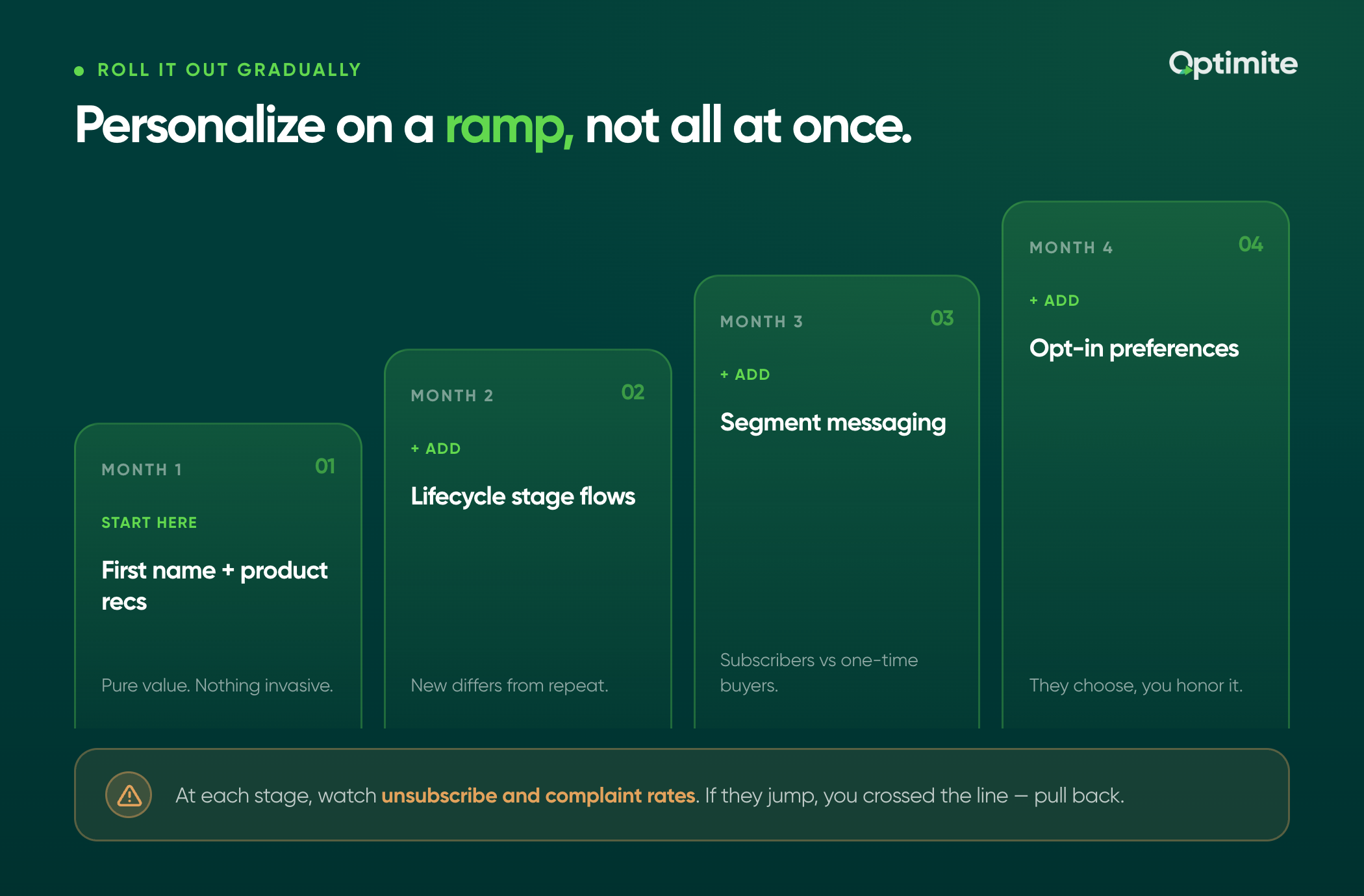
Start conservative. Add personalization gradually.
Month 1: Personalize first name and product recommendations based on purchase history. Nothing invasive. Pure value.
Month 2: Add lifecycle stage personalization. New customer flows different from repeat customer flows.
Month 3: Add segment-based messaging. Subscribers get different content than one-time buyers.
Month 4: Add preference-based personalization. Customers opt into preferences and you honor them.
At each stage, measure customer response. Are unsubscribe rates going up? Are complaint rates going up? Are engagement rates going up? Let the data tell you if you're personalizing the right way.
If unsubscribe or complaint rates jump, you've gone too far. Pull back. You crossed the creepy line.
Most brands can personalize first name, product recommendations, and lifecycle stage without anyone complaining. Those are table stakes. Everything else is bonus. Test carefully.
Personalization in Klaviyo is powerful. But power without ethics is surveillance.
The best personalization uses customer data to send better messages, not to display how much surveillance happened. It feels like the brand listened to the customer. Not like the brand is watching everything.
Use data strategically. Show the benefit, hide the surveillance. Personalize the way you'd want to be personalized.
If you're not sure whether your Klaviyo personalization is working or feels invasive, or if you want to audit your current flows and make sure they're hitting the right balance, let's talk. We build retention systems that feel personal without being invasive. See how we've helped D2C brands across wellness, fashion, and food and beverage personalize at scale without creeping anyone out.


