

7 Klaviyo Flows Every D2C Brand Should Build in Year One
Most brands build the sexy flows first. Here are the foundational 7 that actually drive repeat purchase.
 Arpit Mehar
If I told you to build one Klaviyo flow that would move your repeat rate the most, which would you pick?
Most brands say win-back. It sounds strategic. You're fighting for lapsed customers. That's sexy.
Wrong answer.
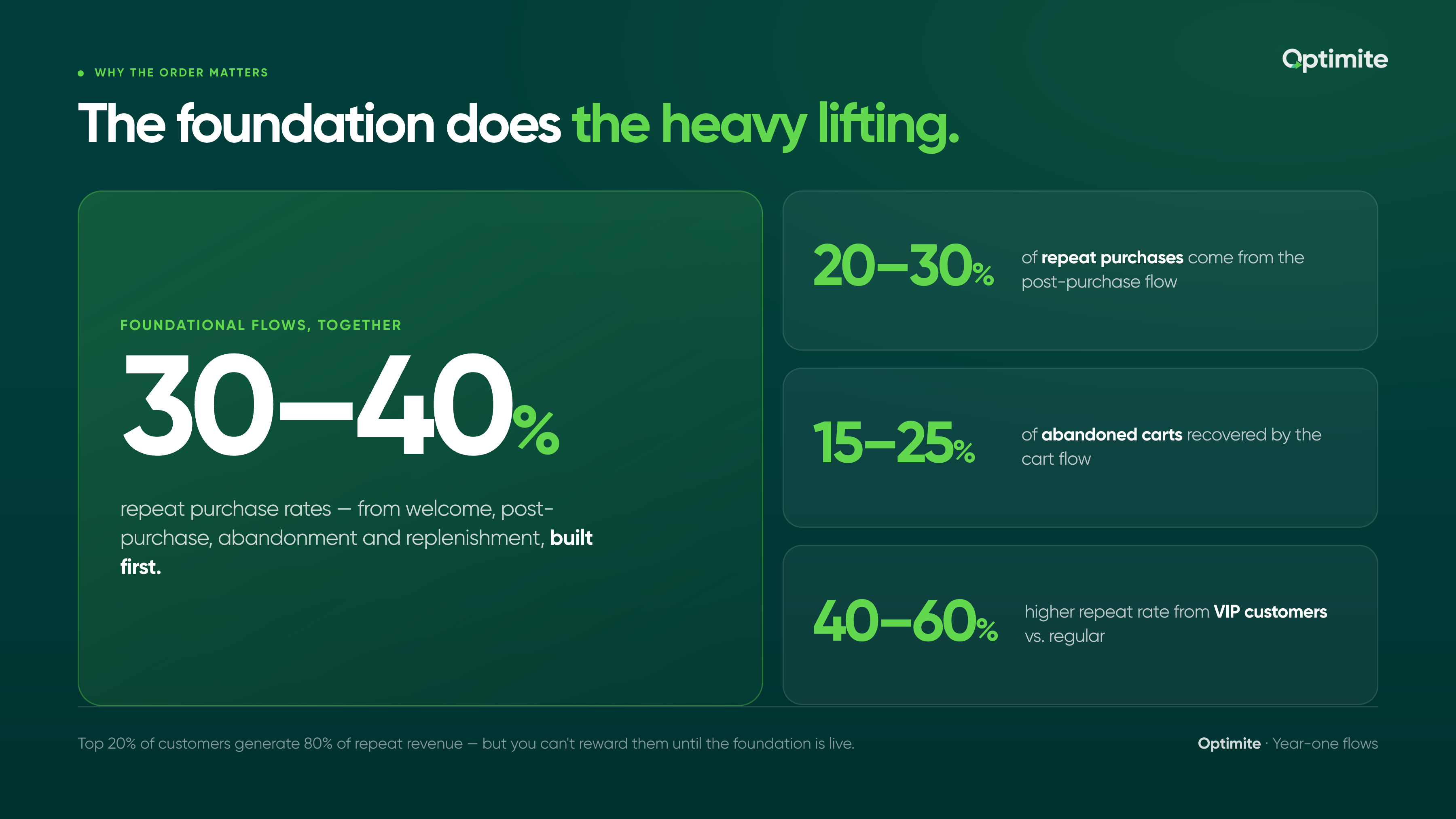
The brands crushing retention build the foundational flows first. Welcome. Post-purchase. Abandoned cart. Replenishment. These are table stakes. They're boring. They don't sound impressive. But together, they drive 30-40% repeat purchase rates. Win-back is the cherry on top, not the foundation.
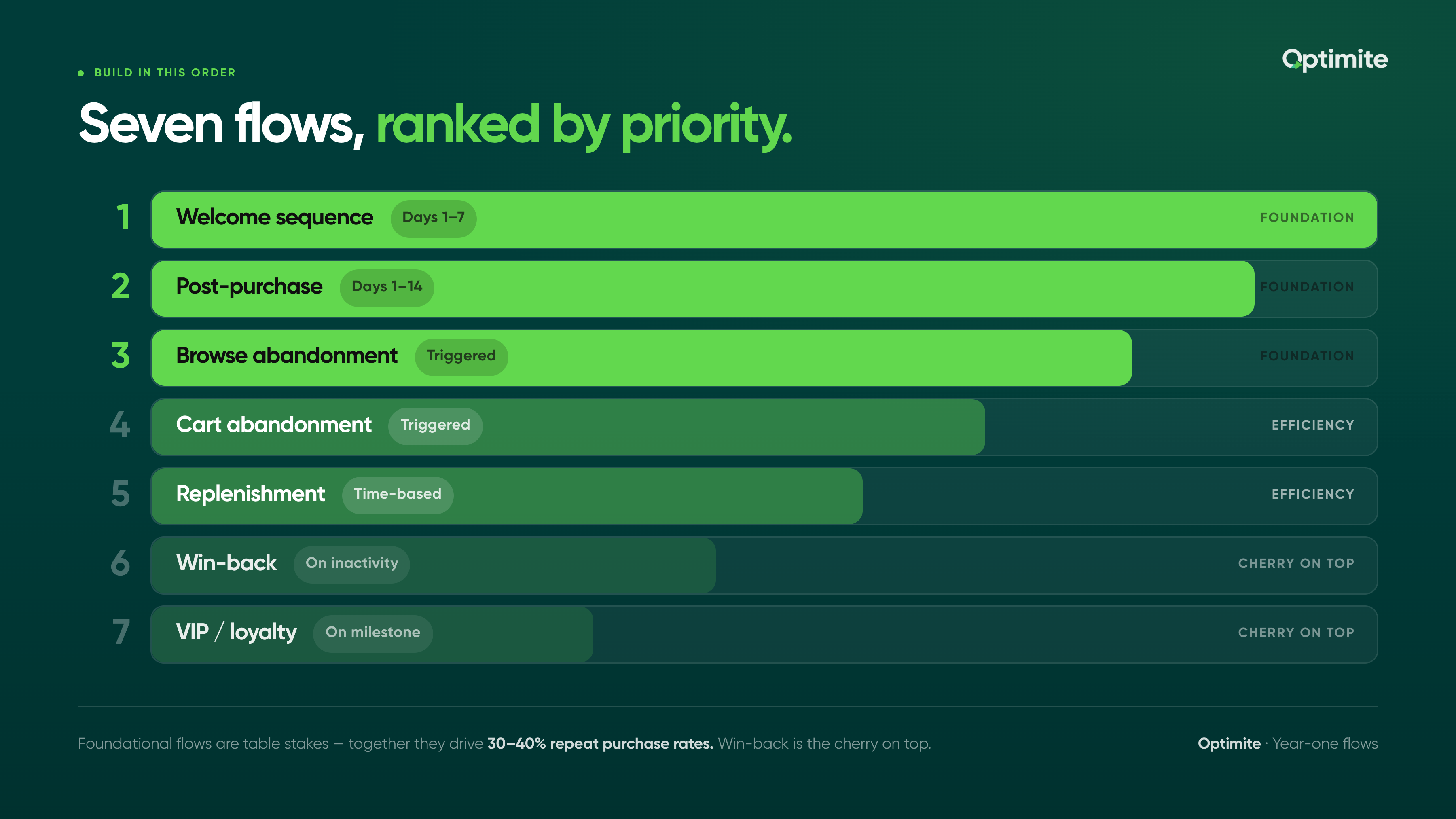
This post ranks all seven flows by priority. Build them in this order in year one and you'll have a functioning retention system. Skip around and you'll waste months rebuilding.
Flow 1: Welcome sequence (days 1-7)
This is your first impression. A new customer just joined your list. They're excited about your brand. They haven't bought yet (or they just did and this is their onboarding). You have one week to set the tone.
Email 1 (day 1): Welcome them. Tell them what to expect. Set the vibe.
Email 2 (day 3): Show them your best product or most popular category. Give them a reason to explore.
Email 3 (day 7): First-time buyer offer. 15% off or free shipping. Create urgency without being pushy.
Why it matters: Welcome sequences see 25-35% open rates (higher than other flows). New subscribers are engaged. They're paying attention. This is your chance to build a relationship.
ROI: A wellness brand we work with saw 22% of first-time email subscribers convert to a purchase within the welcome sequence. That's revenue right away.
The welcome sequence is where you establish tone. Make it friendly, not corporate. Make it helpful, not salesy. These customers will judge your brand on this first touchpoint.
Flow 2: Post-purchase automation (days 1-14)
You just made a sale. Now don't disappear.
Email 1 (day 1): Order confirmation. Shipping details. Make them feel secure.
Email 2 (day 5): How to use the product. Tips. Care instructions. You're helping them get the most from their purchase.
Email 3 (day 10): Show them what pairs well with what they bought. New arrivals. Related products. Plant the seed for repeat purchase.
Email 4 (day 14): Exclusive offer for repeat customers. "Reorder and get 15% off." Create urgency while they're still thinking about the product.
Why it matters: Days 2-14 after purchase are when customers decide if they'll buy again. You're either building momentum or disappearing. This flow builds momentum.
ROI: The post-purchase flow is responsible for 20-30% of repeat purchases. It's your highest-ROI flow.
A fashion brand using this structure saw repeat purchase rate move from 18% to 31% in two months.
Flow 3: Browse abandonment (triggered)
A customer spends time looking at a specific product. They don't buy. They leave. This is a signal they were interested but something held them back.
Email 1 (triggered immediately): Show the product again. Add social proof. Customer reviews. Why people love it. Remove the objection that stopped them.
Email 2 (triggered 24 hours later, if no purchase): Offer a small incentive. 10% off the specific product they looked at. Create urgency without being aggressive.
Why it matters: Browse abandonment is free money. The customer already showed interest. You're just giving them a reason to convert.
ROI: Browse abandonment flows convert at 8-15% depending on offer. A food brand we know sees $200+ per week in revenue from a browse abandonment flow that took 2 hours to set up.
Don't wait too long to send browse abandonment emails. The customer was interested right then. Email within 1-2 hours if possible.
Flow 4: Cart abandonment (triggered)
Cart abandonment is the most classic flow. A customer adds items to their cart. They don't check out. They leave.
Email 1 (triggered 1 hour after abandonment): "You left something behind." Show the items. Show the total. Simple. Direct.
Email 2 (triggered 24 hours later): Add a customer testimonial or benefit statement. Address potential objections. Why should they buy this now?
Email 3 (triggered 48 hours later): Offer an incentive. "Complete your purchase and get 10% off." This is your last attempt before you let them go.
Why it matters: Cart abandonment is the lowest-hanging fruit. The customer was seconds away from buying. You're just removing the last barrier.
ROI: Cart abandonment flows recover 15-25% of abandoned carts. For a $1M brand, that's $150K-$250K in recovered revenue per year from one flow.
A fashion brand we work with recovers $400-600 per week from cart abandonment. It's the most reliable flow in their system.
Flow 5: Replenishment/reorder reminder (time-based)
Your customer bought from you 45 days ago. Their product is probably running low. They haven't reordered. They forgot.
Email 1 (triggered on day 45): "Time to restock?" Show the product they bought. Remind them. Make reordering easy.
Email 2 (triggered on day 50, if no purchase): Offer an incentive or urgency. "Reorder this week and get free shipping."
Why it matters: This is product-specific. A vitamin customer reorders every 45 days. A fashion customer reorders every 90 days. You're reminding them at exactly the right moment.
ROI: Replenishment reminders drive 15-30% of repeat purchase revenue depending on product type. This is passive revenue once it's set up.
A supplement brand sees 40% of their repeat purchases come from the replenishment flow. They're not doing anything special. They're just reminding customers at the right time.
Flow 6: Win-back/re-engagement (triggered on inactivity)
A customer bought 6 months ago. They haven't purchased again. They haven't engaged with emails. They're lapsed.
Email 1 (triggered on day 180 no-purchase): "We miss you." Show your best new products. Give them a reason to come back.
Email 2 (triggered 7 days later): Offer a significant discount. "15% off your next purchase. Valid this week." This is your last attempt to win them back.
If they don't engage with either email, unsubscribe them. They're not your customer anymore. Let them go.
Why it matters: Not every lapsed customer is worth fighting for. But some are. This flow identifies who might come back and gives them one last reason to return.
ROI: Win-back flows convert at 5-10% depending on how long they've been inactive. It's lower ROI than other flows, but it's still revenue.
Don't waste SMS on win-back. Email only. Save your SMS budget for customers who are engaged.
Flow 7: VIP/loyalty rewards (triggered on milestone)
A customer has bought three times. They've spent $500 with you. They're your best customer. They deserve special treatment.
Email 1 (triggered on third purchase or $500 spent): "You're part of our VIP club." Exclusive benefits. Early access to sales. Special pricing.
Email 2 (recurring, quarterly): VIP-only offers. Free shipping. Early access to new products. Make them feel like insiders.
Why it matters: Your top 20% of customers generate 80% of your repeat revenue. Treating them differently pays off.
ROI: VIP customers have 40-60% higher repeat rate than regular customers. They spend more, more frequently.
A wellness brand segments their top-spending customers into VIP and sends them a special offer every quarter. These customers have 3x the repeat rate of regular customers.
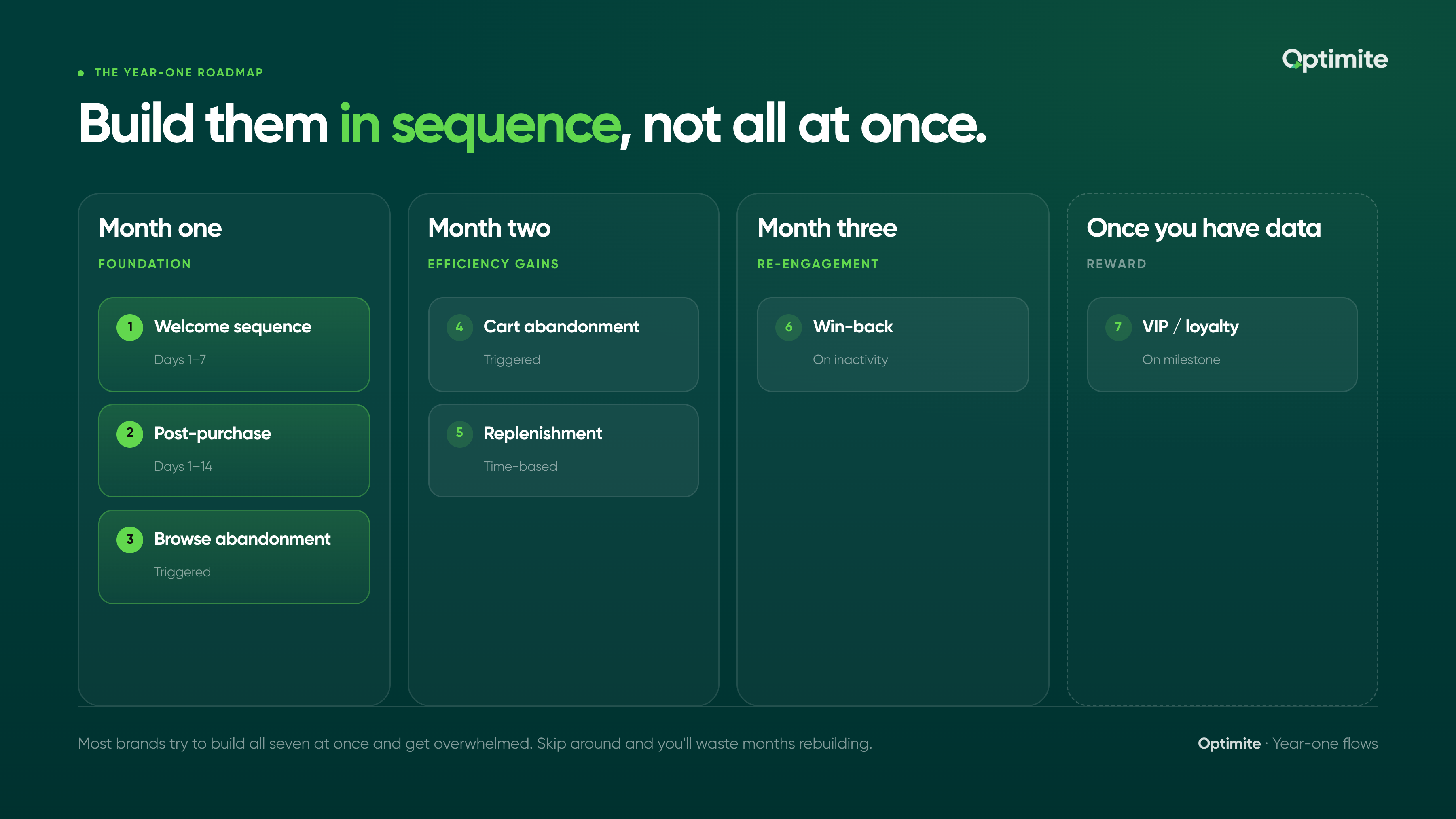
The sequence matters more than the individual flows.
Build flows 1-3 in month one. These are your foundation.
Add flows 4-5 in month two. These are your efficiency gains.
Add flow 6 in month three. Win-back is important but not urgent.
Add flow 7 once you have repeating data. You can't VIP reward customers until you know who your best customers are.
Most brands try to build all seven at once and get overwhelmed. They start with the sexy flows (win-back sounds impressive) and skip the foundational ones. Then they wonder why their repeat rate isn't moving.
The priority order is: welcome, post-purchase, browse abandonment, cart abandonment, replenishment, win-back, VIP. Build in that order and you'll have a working retention system by month three.
If you want help building these flows or want an audit of your current Klaviyo setup to see which ones you're missing, let's talk. We've built these flows for hundreds of D2C brands. Check out how we've helped brands across wellness, fashion, and food and beverage move from zero flows to a working retention system.


