

How Small DTC Brands Can Run Meaningful Pride Month Campaigns on a Tight Send Cadence
A tight send calendar is not a barrier to a meaningful Pride Month campaign. Here is how to plan three emails that actually land.
 Shrestha Ghosal
Small DTC brands often sit out Pride Month because they assume meaningful participation requires a dedicated product line, a charity partner, or a campaign budget they do not have. None of those things are prerequisites. What they require is a purpose, a clear point of view, and a send plan that works within the constraints most smaller brands are actually operating under.
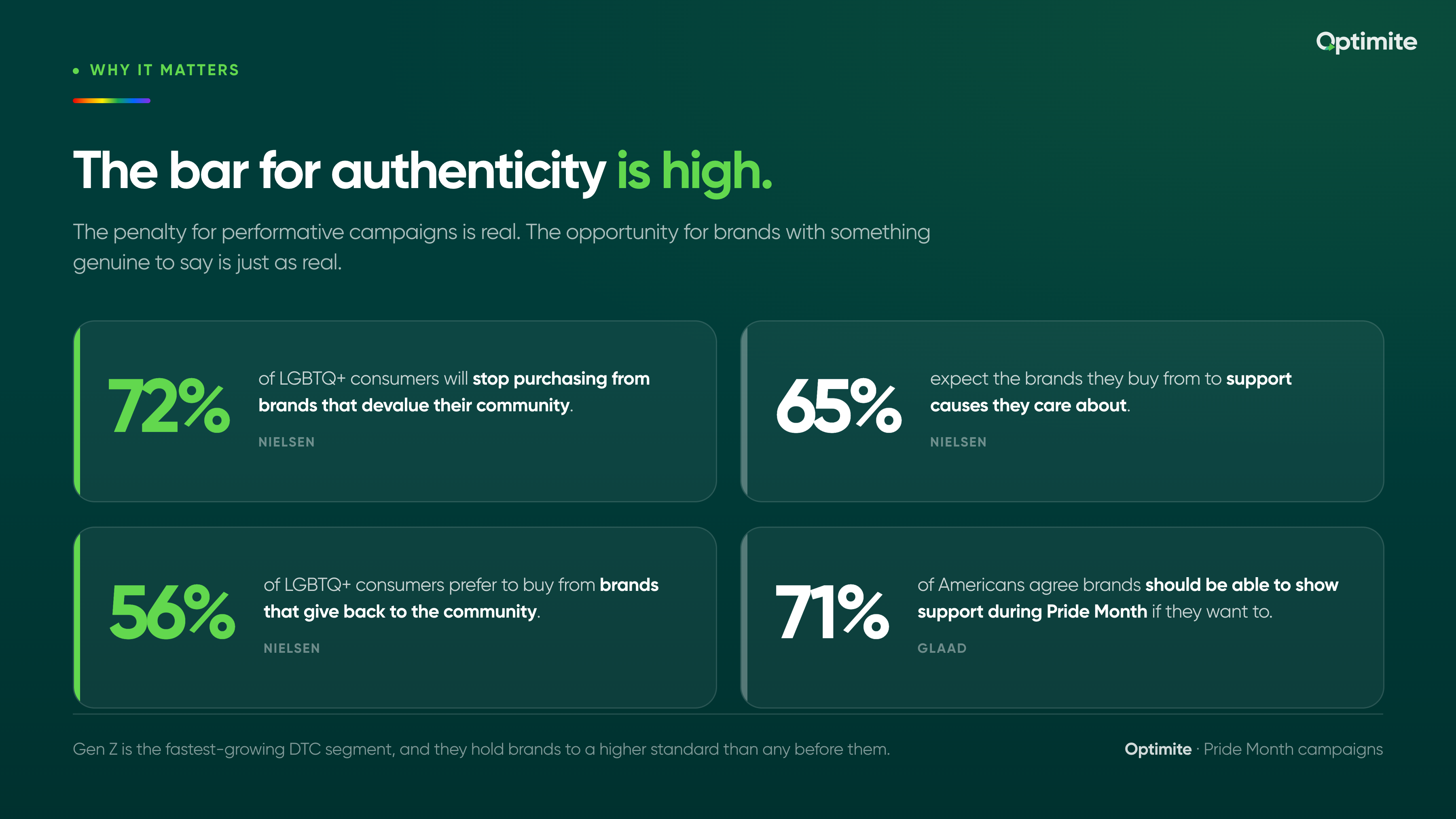
A tight send cadence, two to three emails across June, can carry more weight than a brand that blasts its list every three days with rainbow graphics and a generic discount code. According to Nielsen research, 72% of LGBTQ+ consumers will stop purchasing from brands that devalue their community, and 65% expect the brands they buy from to support causes they care about. The bar for authenticity is high, and the penalty for performative campaigns is real. That is actually good news for smaller brands, because genuine costs nothing.
This post covers how to plan, structure, and execute a Pride Month email campaign that lands with your audience, drives meaningful engagement, and fits a lean send calendar.
Start with your brand's actual position
Before writing a single email, be clear about where your brand genuinely stands. Pride Month is not a campaign theme to pick up for June and put down in July. LGBTQ+ consumers and their allies are experienced at identifying brands that show up once a year and disappear.
Ask two questions before planning anything:
- Does your brand have LGBTQ+ representation on your team, in your community, or in your customer base that this campaign can reflect honestly?
- Is there something specific your brand can do or say during Pride Month, a donation, a community spotlight, a product, an event, that connects to values you hold year-round?
If the honest answer to both is no, a low-key acknowledgement email is more credible than a full campaign built on borrowed values. A single email that says "we see this community and here is why it matters to us" will land better than a four-email series that reads like it was written to satisfy a marketing calendar.
According to GLAAD research, 71% of Americans agree that brands and companies should be able to show support to the LGBTQ+ community during Pride Month if they want to. The opportunity is there. The question is whether your brand has something real to say.
Map your sends to a three-email structure
For a brand sending two to three emails per week, Pride Month does not require carving out a separate track. It requires making one or two sends in June count for more than a standard promotional email. Here is a three-email structure that works within a tight cadence:
Send one: The values email, week one of June
Open with your brand's position. This email is not a sale. It introduces why Pride Month matters to your brand, includes a relevant story or perspective, and connects to something specific, a charity donation, a community collaboration, a product story, whatever is real for you. Keep it short. One or two paragraphs. One clear visual. A low-pressure CTA if there is a product or initiative to point to.
Send two: The product or initiative email, week two or three
If you have a Pride product, a limited edition, or a charitable giving offer, this is where it lives. Be transparent about where proceeds go, how much, and how the product was developed. If you partnered with an LGBTQ+ creator or organisation to develop it, tell that story specifically. Consumers respond to detail, not vague statements about giving back.
Send three: The community or close email, final week of June
Close the month with something that reinforces the values email rather than just pushing a sale. A customer spotlight, a community story, or a simple thank-you to the segment of your list that engaged with your Pride content. This email signals that the month meant something beyond revenue, and it is the one most likely to generate long-term loyalty.
Segment your list before sending. Not every subscriber opted in for cause-related content. If you have behavioural data that identifies engaged subscribers versus dormant ones, send your values email to engaged segments first. A well-targeted three-email campaign will outperform a full-list blast on both open rate and downstream retention.
Write copy that reflects the community, not the calendar
The most common mistake in Pride Month email copy is writing about Pride in the abstract: celebrations of love, diversity, and equality without any specificity. That language does not connect with anyone. It reads like it was written by a committee trying to avoid saying anything controversial.
Specific copy lands harder. If your brand donated to a local LGBTQ+ youth shelter, name the shelter. If your campaign was developed with an LGBTQ+ designer, introduce them by name and share one line about their perspective. If a member of your team has a story that is relevant and they are willing to share it, that one paragraph will outperform any marketing headline you could write.
According to research published in the International Journal of Latest Technology in Engineering, authentic representation in brand messaging fosters emotional engagement and long-term brand loyalty with Gen Z consumers, while performative allyship leads to backlash and reputational damage. Gen Z is your fastest-growing DTC customer segment. The standard for authenticity they hold brands to is higher than any generation before them.
Write copy the way you would write a founder story email: direct, specific, and honest about where the brand stands.
Handle the charitable giving angle carefully
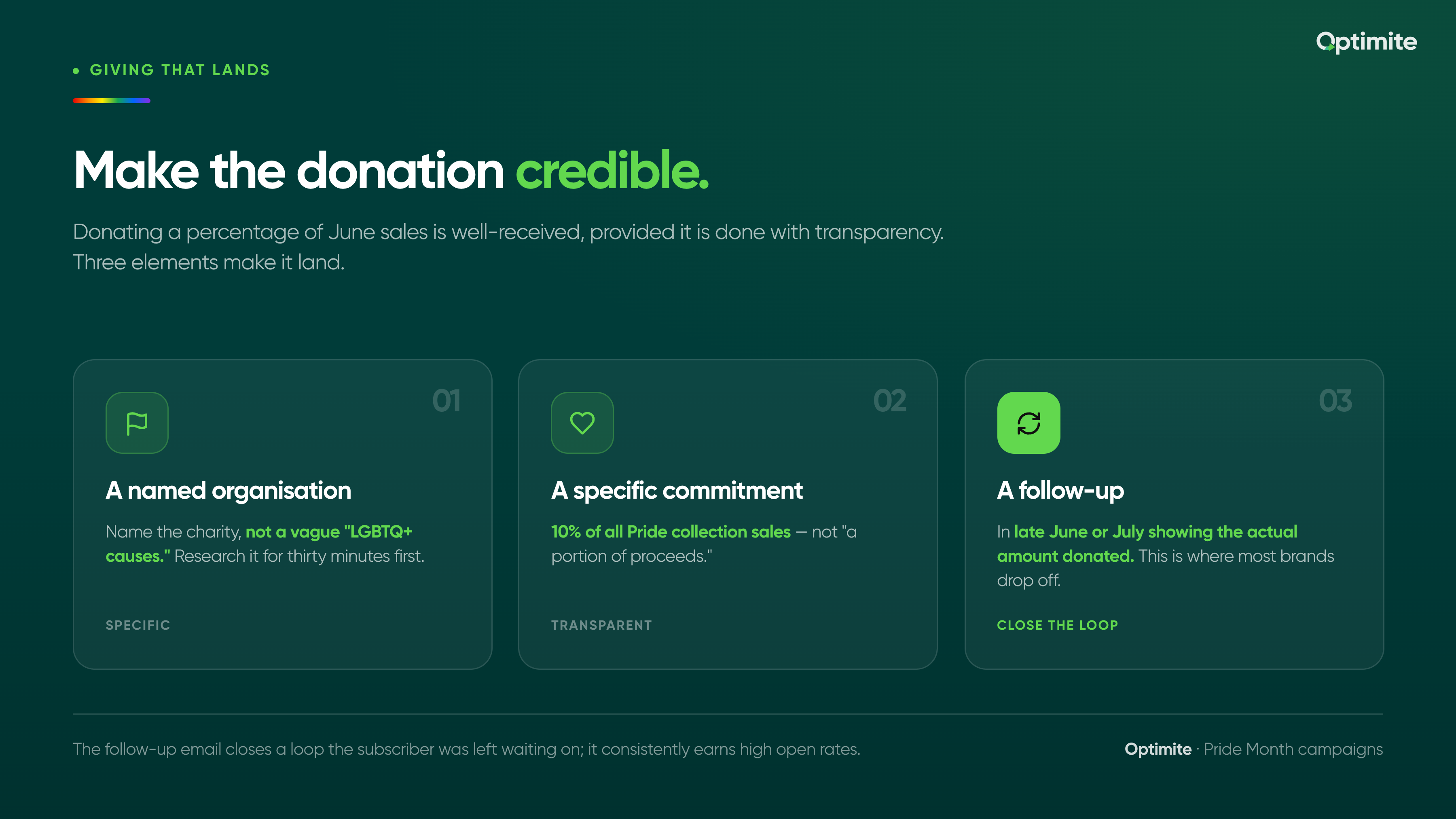
Donating a percentage of June sales to an LGBTQ+ charity is a credible and well-received approach, provided it is done with transparency. The elements that make it land:
- A named organisation, not a vague "LGBTQ+ causes"
- A specific commitment, 10% of all Pride collection sales, not "a portion of proceeds"
- A follow-up in late June or July showing the actual amount donated
The follow-up is where most brands drop off. Sending one email that announces the donation and then going silent reads as a revenue play. Sending a follow-up that shows the final number, even if it is modest, shows that the commitment was real. That follow-up email has consistently high open rates because it closes a loop the subscriber was left waiting on.
Avoid choosing a charity solely for recognition. Research the organisation before you name them. Some LGBTQ+ charities have faced public criticism or internal controversies. Spend thirty minutes checking that the organisation is reputable, well-regarded within the community, and aligned with the values your brand is claiming.
Use your flows to extend Pride Month beyond June
A campaign that runs through June and disappears on July 1 reinforces the perception that the brand was performing rather than participating. Your retention flows can carry the commitment forward without requiring additional campaign sends.
A few practical ways to do this:
- Add a Pride-related story or product block to your welcome flow for new subscribers who join in June. They entered your list during Pride Month. Acknowledging that is a small signal with a disproportionate impact on first impressions.
- Tag subscribers who engaged with your Pride sends and create a segment for that audience. When you have a campaign or product in September that connects to values, community, or giving, that segment is worth speaking to separately.
- If you donated to a charity, add a brief reference to it in your post-purchase flow for July. A line that says "last month we raised X for Y, here is what that means" keeps the narrative alive without manufacturing a new campaign.
Small adjustments to existing flows create continuity across the year. Brands with a consistent point of view across their full retention stack earn more long-term loyalty than those whose values appear only in campaign sends.
According to Nielsen, LGBTQ+ audiences are 50% more likely to spend three or more hours per day on social media compared to the general population. Your email campaign is one touchpoint. Brands that coordinate their email sends with social content and community engagement across June see better overall campaign performance than those treating email as the only channel.
What a three-send Pride calendar actually looks like
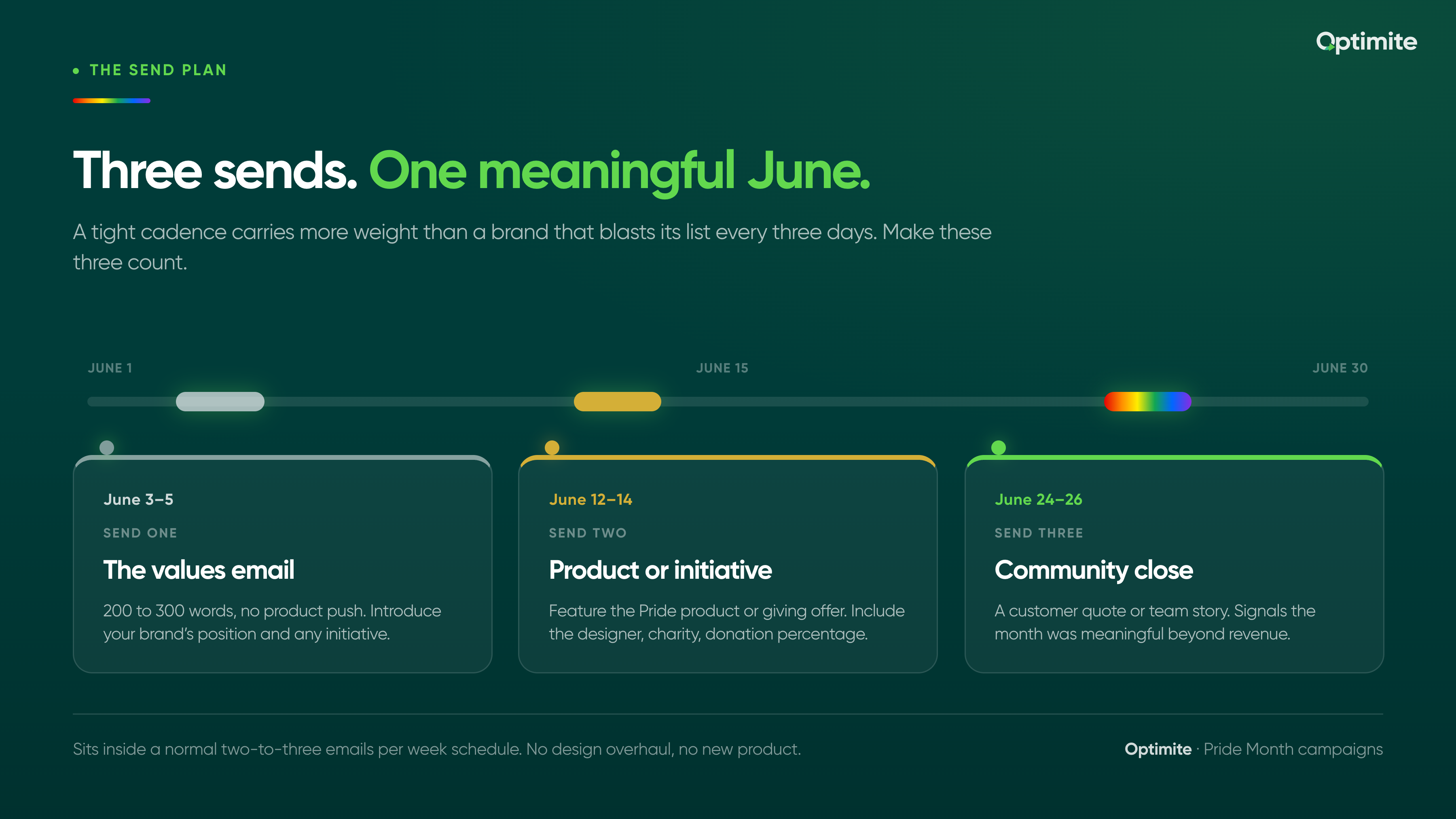
Here is a concrete example of how to map three sends across June without disrupting a regular campaign cadence:
June 3 to 5, values email: 200 to 300 words, no product push, introduce your brand's position and any charity or community initiative. Subject line anchored to the brand's specific story, not a generic Pride greeting.
June 12 to 14, product or initiative email: Feature the Pride product, limited edition, or giving offer. Include specific details: the designer, the charity, the donation percentage. CTA to the product page or donation page. Imagery that includes real representation, not stock rainbow graphics.
June 24 to 26, community close email: Short email. Could be a customer quote, a team member story, or a preview of the charity follow-up. Signals that the month was meaningful without over-extending the campaign.
This calendar sits within a normal two-to-three emails per week send schedule. None of the three requires a design overhaul or a new product. What it requires is a clear brand position and copy that reflects it honestly.
The longer-term return on doing this well
Pride Month campaigns done well compound over time. LGBTQ+ consumers and their allies are vocal about which brands show up authentically and which ones do not. Word of mouth within those communities carries significant weight, particularly in fashion, beauty, wellness, and lifestyle categories where most DTC brands compete.
Brands that invest in genuine Pride content see it reflected in subscriber retention, repeat purchase rates among engaged segments, and organic sharing that extends campaign reach beyond the email list. The return is not always visible in a single month's revenue report. It shows up in the quality of the customer base being built.
According to Nielsen research, 56% of LGBTQ+ consumers prefer to buy from brands that give back to the community. That preference does not expire in July. Running a meaningful Pride Month campaign for a small DTC brand with a tight send cadence is one of the most efficient ways to earn that preference and keep it.
If you want to build a campaign calendar that works within your current send cadence and actually moves your retention metrics, book a free call with the Optimite team. We will look at your current calendar, your list segmentation, and your engagement data, and tell you exactly where a Pride campaign fits and how to build it without overextending your sends.
Keep reading.
All posts
Mid-Year Review Email: The Campaign Type That Builds Trust Without Selling Anything
Shrestha Ghosal · Jun 18, 2026

Top Mistakes To Avoid In Father’s Day Campaigns
Shrestha Ghosal · Jun 8, 2026

7 Father's Day Email Campaign Ideas That Drive Repeat Purchases, Not Just One-Off Gifts
Shrestha Ghosal · Jun 5, 2026