

7 Father's Day Email Campaign Ideas That Drive Repeat Purchases, Not Just One-Off Gifts
How to turn a seasonal gifting spike into long-term repeat purchase behaviour for your ecommerce brand
 Shrestha Ghosal
Father's Day is one of the most reliable gifting spikes on the e-commerce calendar. Brands run promotions, pull in a wave of new buyers, and see a clean revenue lift for two weeks. Then most of those buyers are gone.
The sale happened. The gift was delivered. And the brand never heard from that customer again.
The gifting moment itself isn't the problem. Father's Day email campaigns generate real demand from buyers who are ready to spend. The gap is in what happens after the purchase. The gift-giver who spent $80 on a grooming kit in June will buy again before Christmas. The dad who received it and loved it is a warm potential first-time buyer. Neither of those opportunities requires a new ad budget. They require a retention strategy built around the gifting window.
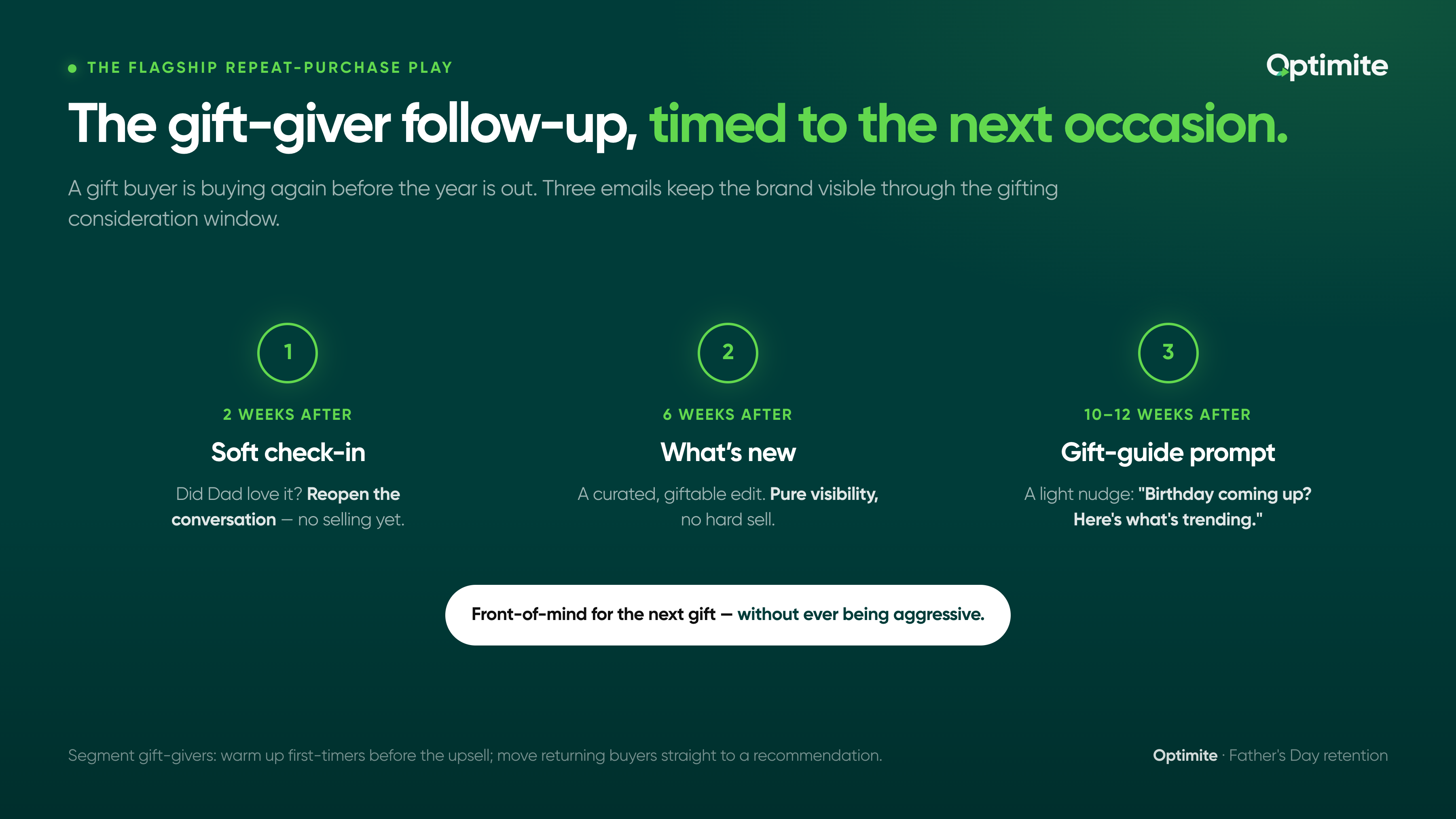
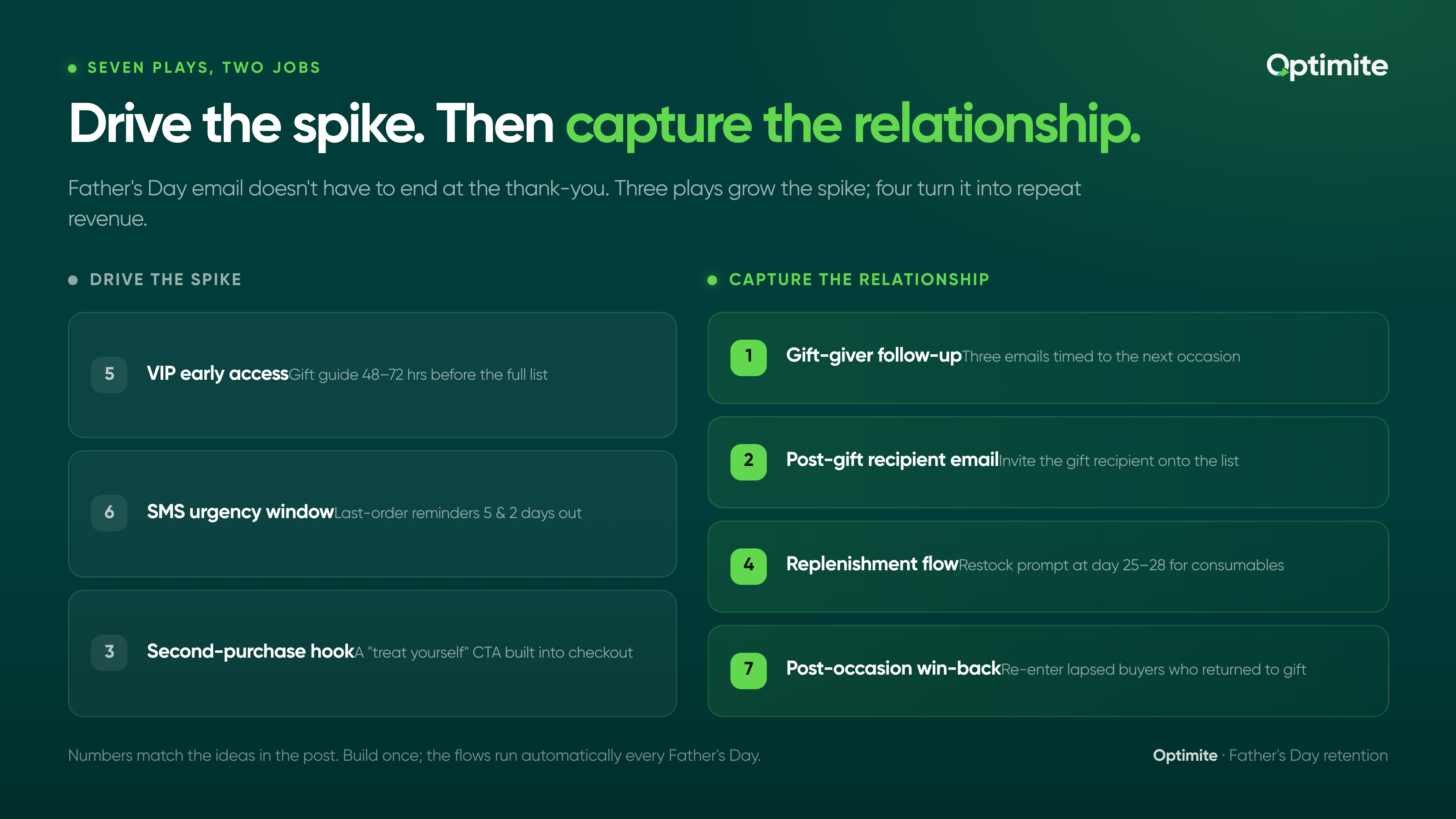
Here are seven Father's Day email campaign ideas that go beyond the sale and build repeat purchase behaviour.
1. A gift-giver follow-up sequence timed to the next occasion
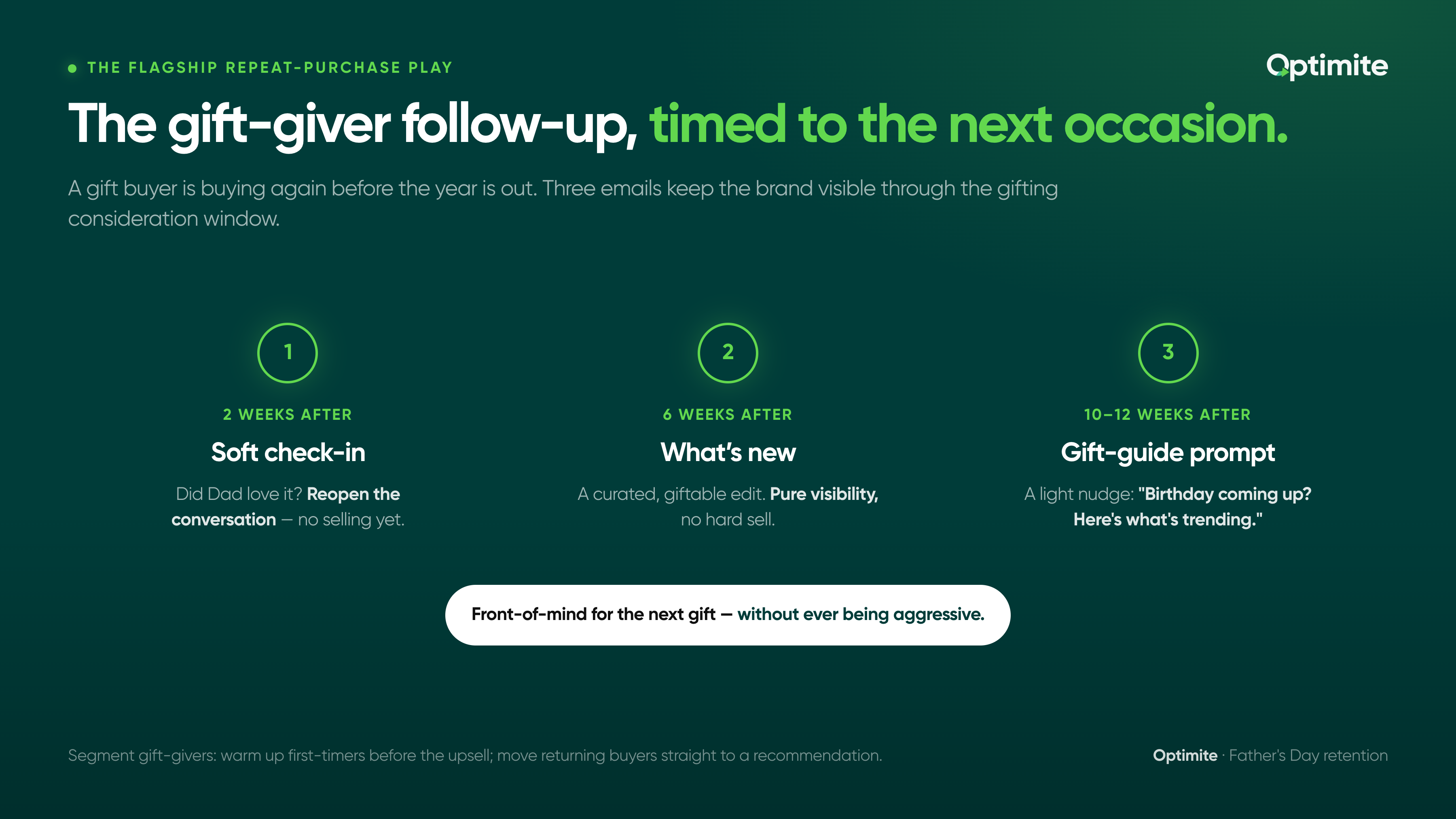
Someone who bought a Father's Day gift has already told you something valuable: they're a gift buyer. That purchase behaviour repeats. Birthday, Christmas, anniversary. The question is whether your brand is visible when the next gifting moment arrives.
A three-email gift-giver follow-up sequence keeps the relationship warm between purchase moments:
- Email 1, two weeks post-Father's Day: A soft check-in. Did Dad love it? Any questions about the product. One job: reopen the conversation without a hard sell.
- Email 2, six weeks post-Father's Day: A curated "what's new" send with products suited to gifting. Visibility, not pressure.
- Email 3, ten to twelve weeks post-Father's Day: A light gift guide prompt. "Birthday coming up? Here's what's trending right now."
Repeat customers spend 67% more than first-time buyers on average, according to Bain and Company. A gift buyer who comes back twice is worth substantially more than one who bought once and moved on. This sequence costs almost nothing to build and runs automatically every year once it's live.
Segment gift-givers by whether they've purchased before. First-time gift buyers need a warmer welcome sequence before any product push. Returning gift buyers who know the brand can move faster toward a recommendation.
2. A post-gift experience email to the recipient
This is the Father's Day retention opportunity most brands leave completely untouched. The person who received the gift is not in your Klaviyo account. But they can be.
If your brand ships with a gift receipt or a branded insert, that physical touchpoint is an invitation. "Loved your gift? Here's 10% off your first order" with a short URL or QR code is all it takes to bring the recipient into your list.
When a recipient opts in, they enter a welcome sequence with a specific angle:
- They've already had a positive brand experience through someone else's purchase
- They're warm to the product before spending a penny of their own money
- Their first-party data is now yours to build a customer relationship on
For brands in wellness, grooming, or lifestyle categories where gifting is a common entry point, this tactic turns a one-household purchase into two active customer relationships. Post-purchase flows see open rates 2 to 3 times higher than standard campaign emails, according to Klaviyo benchmark data. A well-timed post-gift email benefits from that same elevated engagement window.
Klaviyo's benchmark data shows post-purchase flows generate open rates 2 to 3 times higher than standard campaign sends. A post-gift recipient email, sent within 7 to 10 days of delivery, lands in the same high-engagement window.
3. A Father's Day campaign with a second-purchase hook built in
Most Father's Day email campaigns are structured entirely around conversion to a first purchase. The gift angle is strong, the product is showcased, the CTA is buy now. That's the right structure for acquisition. It does nothing for retention.
Adding a second-purchase hook directly into the campaign changes the economics. Practically this means:
- A post-purchase email offering the gift buyer a discount on something for themselves
- A checkout bundle that pairs a dad gift with a personal purchase at a slight saving
- A campaign email that leads with the gift angle and includes a secondary "treat yourself" CTA lower in the email
Someone buying a Father's Day gift is already in a spending mindset. The purchase decision has been made. Converting them to a second purchase at that moment costs far less than retargeting them six weeks later with a paid ad.
For fashion, grooming, or wellness brands where a customer buying for their dad might reasonably want the same product for themselves, this is one of the cleanest conversion opportunities in the seasonal calendar.
4. A replenishment flow for consumable Father's Day gifts
If your brand sells consumables, the Father's Day gifting window creates a replenishment opportunity that the vast majority of ecommerce brands don't build for.
A customer buys a 30-day grooming product, a supplement stack, or a speciality coffee subscription as a Father's Day gift. Thirty days later, Dad has either loved it or hasn't. If the post-gift email did its job and he's on your list, you have everything you need to time a replenishment prompt correctly.
The flow structure:
- Tag all Father's Day orders in Klaviyo at purchase using a custom property or order tag
- Build a conditional split that checks whether the recipient has opted in via the post-gift sequence
- For opted-in recipients: trigger a replenishment email at day 25 to 28 based on the product's consumption window
- For the original gift buyer: send a "Did Dad love it? Time to restock" email at the same window
This flow runs on autopilot every year once it's built. The setup takes a few hours. The revenue compounds with every Father's Day.
Don't send replenishment emails to gift buyers who haven't engaged with any email since the original purchase. If they've gone completely cold in 30 days, a replenishment push will generate unsubscribes rather than conversions. Run a quick engagement check before triggering the sequence and suppress anyone with zero opens or clicks since purchase.
5. A VIP Father's Day campaign for high-LTV customers
Your top-tier customers, the ones who buy frequently and consistently spend the most, deserve a different Father's Day experience than the standard promotional email going to your full list.
A VIP Father's Day campaign has three distinct elements:
- Early access: VIP customers receive the Father's Day gift guide 48 to 72 hours before the full list. This signals loyalty recognition, not just sales urgency.
- Exclusive product or bundle: A product, bundle, or configuration available only to VIP customers during the Father's Day window. Access, not discount.
- Direct acknowledgement: The email references their loyalty specifically. "You've been with us since last year. Here's something we made for customers like you." Short, human, specific.
VIP campaigns for seasonal peaks are among the highest-converting sends in the retention calendar. The audience is already predisposed to buy. The exclusivity removes any remaining friction. The only work is building the segment and writing one email.
6. An SMS campaign built around real shipping deadlines
Father's Day has a hard deadline. That makes it one of the cleaner use cases for SMS in the seasonal marketing calendar, because the urgency is genuine rather than manufactured.
A coordinated Father's Day email and SMS sequence:
- Email, 12 to 14 days before: Full gift guide launch to the engaged list
- SMS, 5 days before: Last order date for standard shipping. Direct, specific, short.
- SMS, 2 days before: Last chance for express delivery. One line, one CTA.
- Email, 3 to 5 days post-Father's Day: The second-purchase hook for gift buyers who converted
The SMS sends in this sequence work because they answer a real question the buyer has: can I still get this in time? That's useful information, not a promotional push. Subscribers respond to SMS that respects their time and answers a genuine logistical concern.
SMS unsubscribe rates spike when brands send promotional messages without a genuine time-pressure reason behind them. Father's Day shipping deadlines are one of the few seasonal moments where SMS urgency is credible. Keep the copy direct, the deadline specific, and the CTA to a single action.
7. A post-Father's Day win-back for lapsed customers who returned for the occasion
Every Father's Day, a predictable segment of lapsed customers comes back specifically to buy a gift. They purchase, the occasion passes, and then they go quiet again. Most brands let this happen without any targeted intervention.
These customers are worth pursuing deliberately. They came back once. That's a meaningful signal.
To find them, look for customers who:
- Last purchased 90 or more days before Father's Day
- Made a purchase during the Father's Day window (June 1 to 15 approximately)
- Have not opened or clicked an email in the 30 days since
This segment enters a dedicated post-Father's Day win-back sequence, separate from the standard win-back flow:
- Email 1 at day 30 post-purchase: "Glad you're back. Here's what's new since your last order." Warm, low-pressure.
- Email 2 at day 45: A product recommendation based on the Father's Day purchase category. Shows the brand knows who they are.
- Email 3 at day 60: A direct re-engagement offer if the first two emails haven't generated a click or purchase.
This sequence converts at a higher rate than a generic win-back because the recent purchase gives a warm re-entry angle. The messaging acknowledges the occasion and uses it as a bridge back into the relationship.
Father's Day is consistently one of the most under-monetised moments in the e-commerce retention calendar. The gifting spike brings in buyers who have already demonstrated intent and willingness to spend. The flows and campaigns to capture that beyond a single transaction are straightforward to build once the strategy is in place. If you want to put a Father's Day retention plan together for your brand before the window closes, book a free call with us and we'll walk through exactly what to build.
Keep reading.
All posts
Mid-Year Review Email: The Campaign Type That Builds Trust Without Selling Anything
Shrestha Ghosal · Jun 18, 2026

How Small DTC Brands Can Run Meaningful Pride Month Campaigns on a Tight Send Cadence
Shrestha Ghosal · Jun 12, 2026

Top Mistakes To Avoid In Father’s Day Campaigns
Shrestha Ghosal · Jun 8, 2026